

How Standard mode works
In Standard mode, Presenton processes your source PPTX slide by slide.- Each filled source slide is converted into a reusable slide layout.
- AI identifies text, images, icons, and other editable regions on the slide.
- Presenton creates an internal schema for each layout so future presentations can keep the same design while replacing the content.
Before you start
- Prepare a
.pptxfile that contains representative slides for the layouts you want to reuse. - Include real content in those slides instead of blank placeholders.
- Make sure the deck includes the visual variety you want the template to support, such as title slides, section slides, image slides, charts, or closing slides.
- Keep the source file under the upload limits shown in Template Studio.
Create a template in Standard mode
Open Standard mode
Open the dashboard and go to Standard mode
From the main dashboard, open the left navigation and select Standard.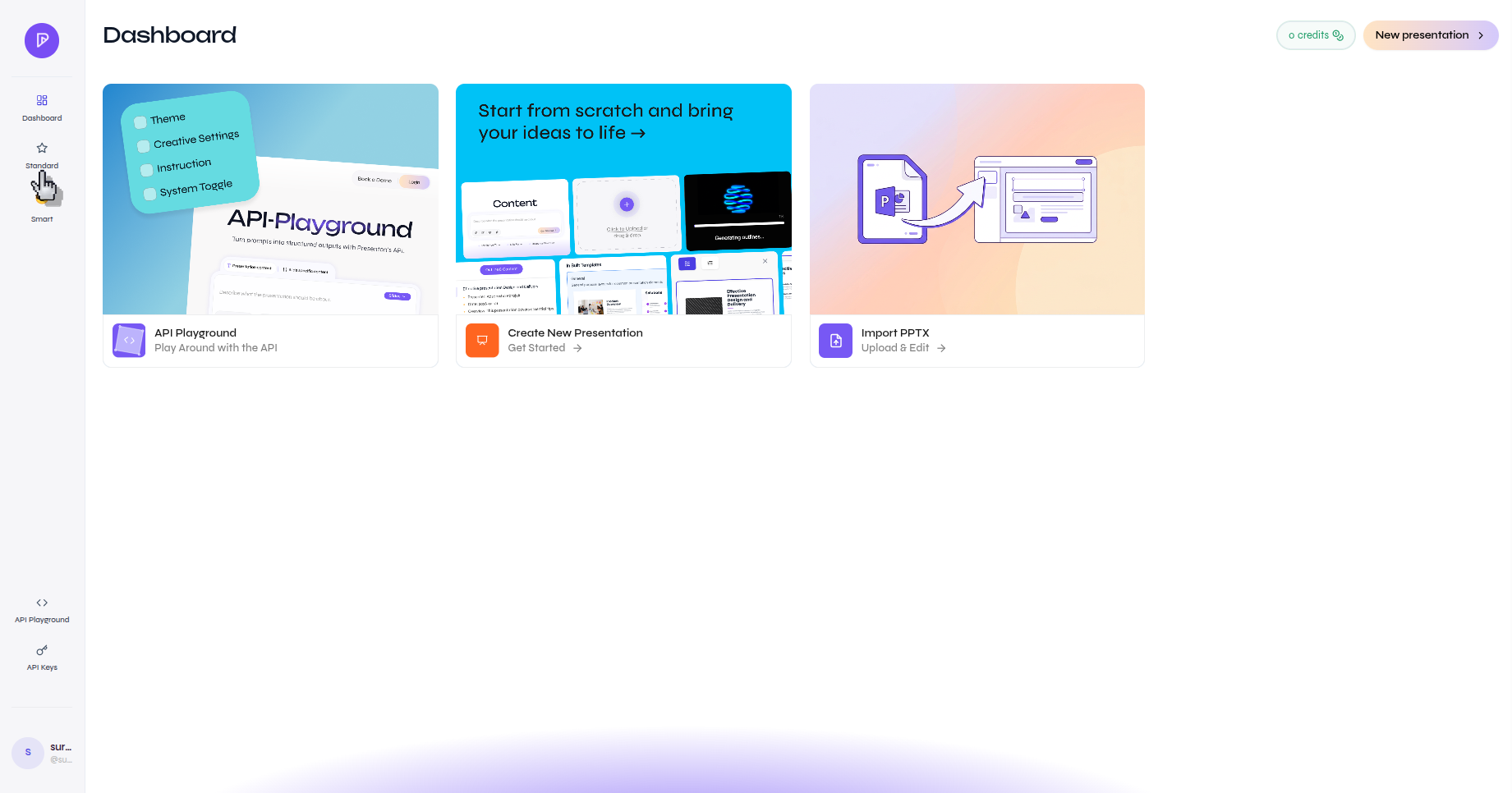
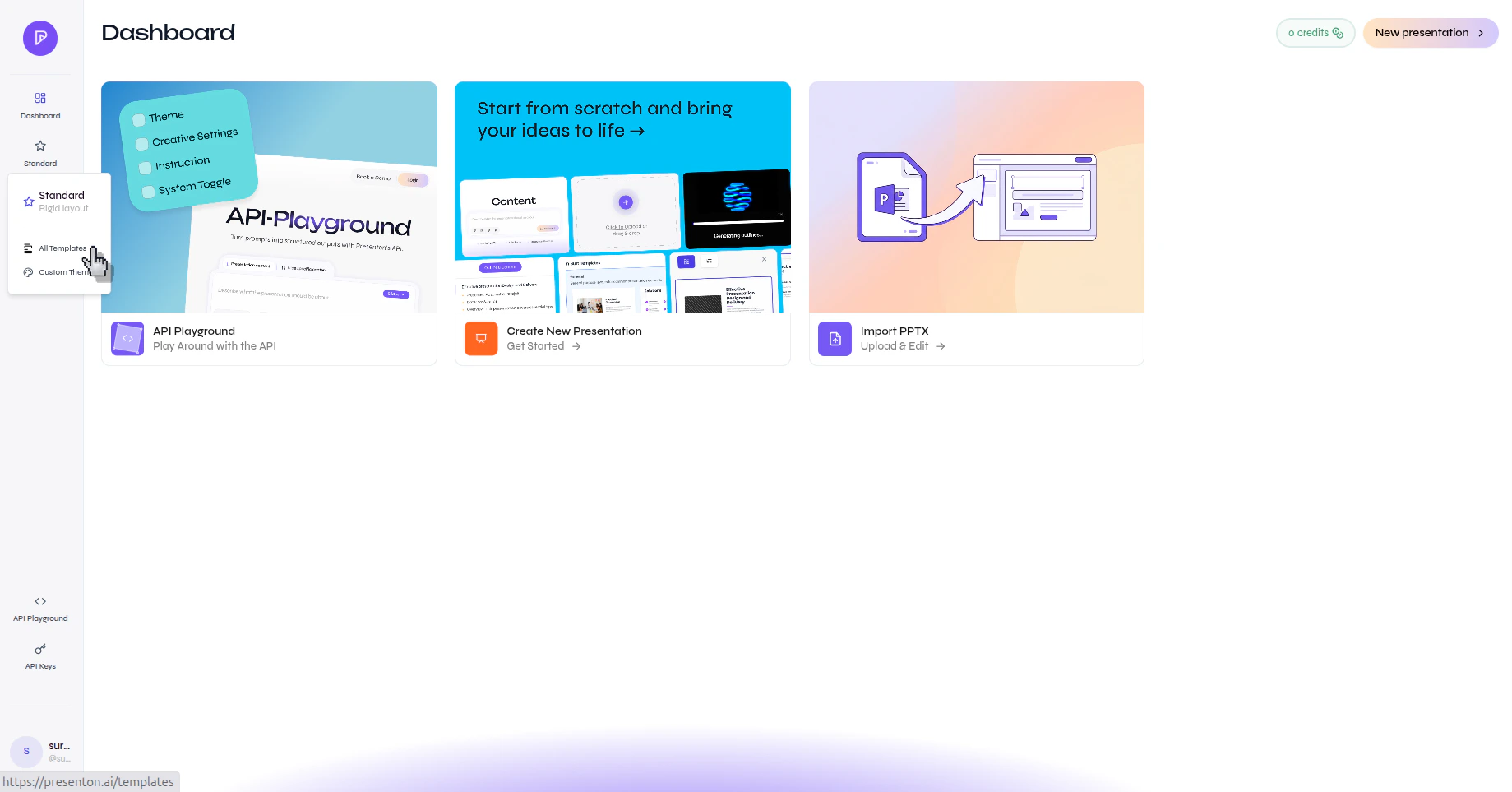
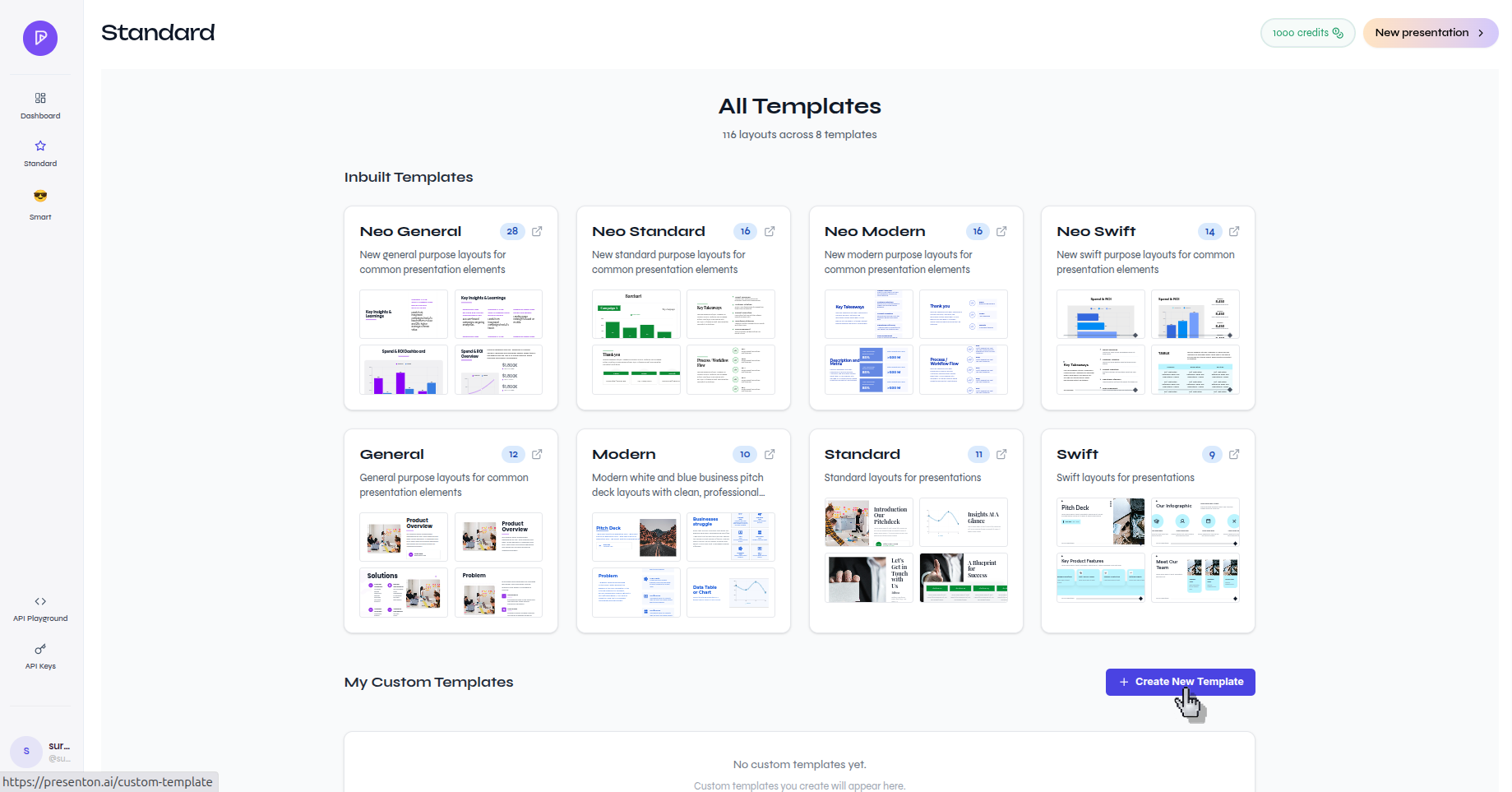
Upload the PPTX and resolve fonts
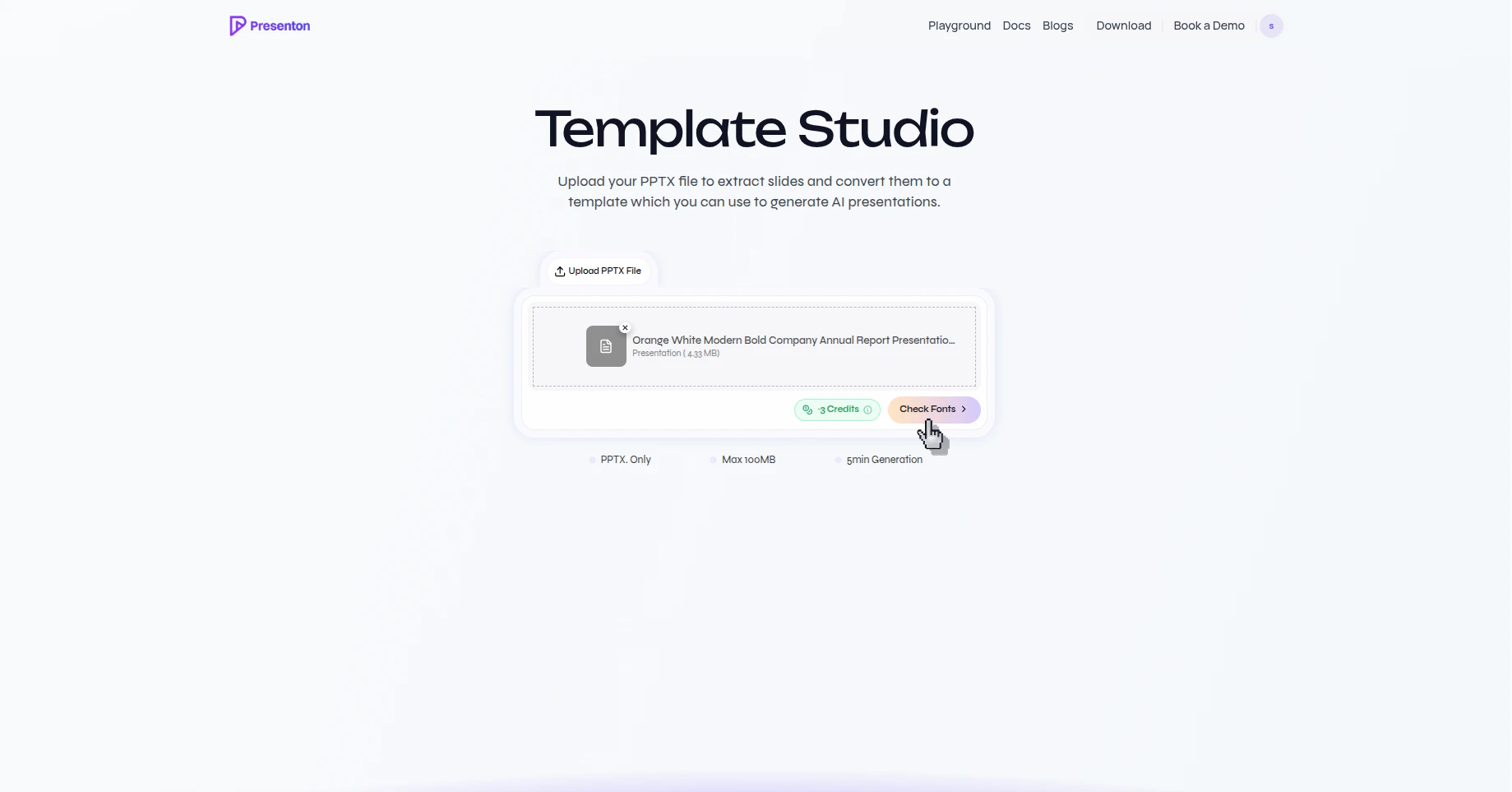
Upload the source PPTX in Template Studio
In Template Studio, upload the PowerPoint file you want to convert into a template.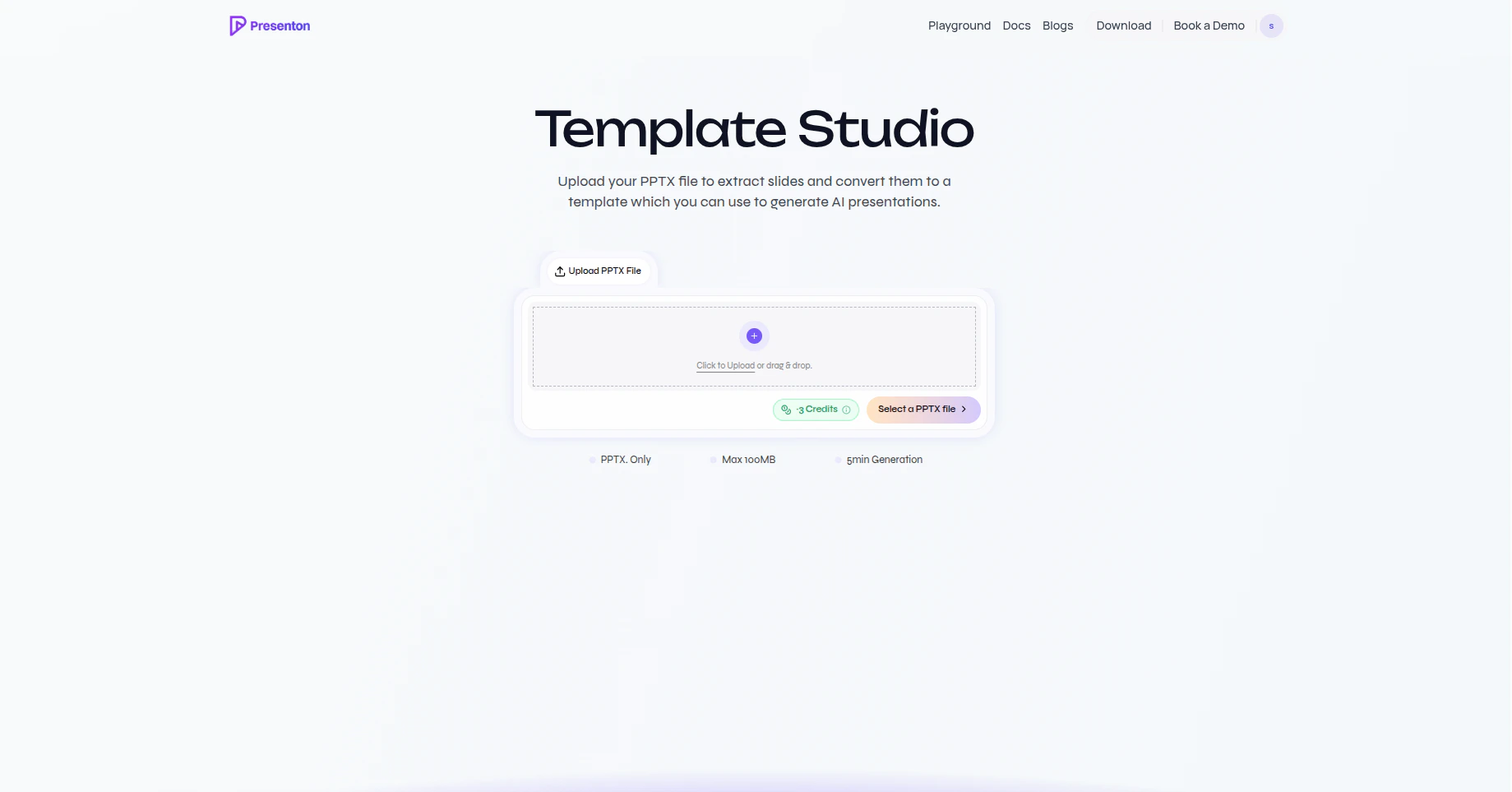
Upload any missing fonts
Review the Font Management screen. If a font is missing, upload the font file so the slides render correctly.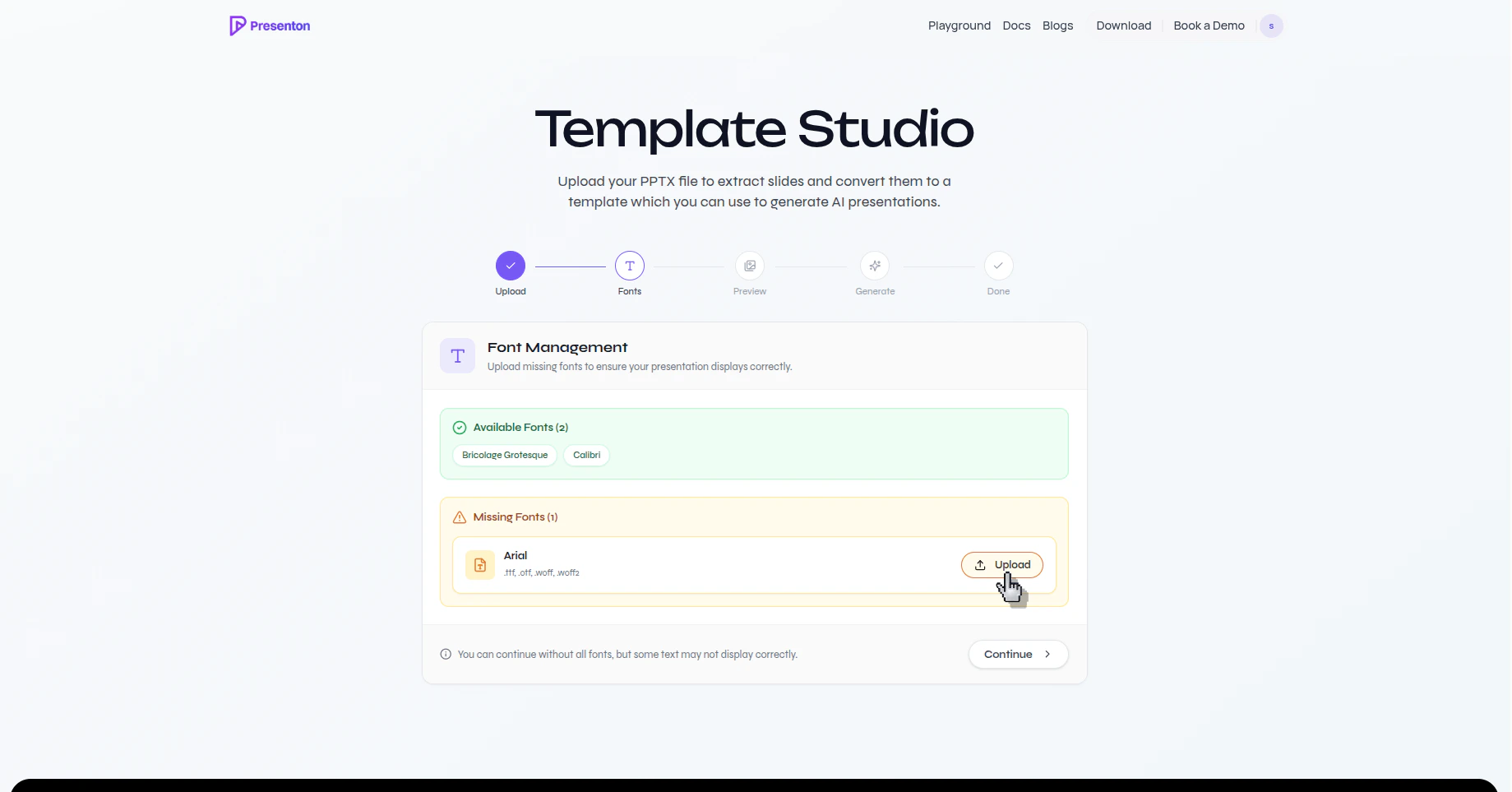
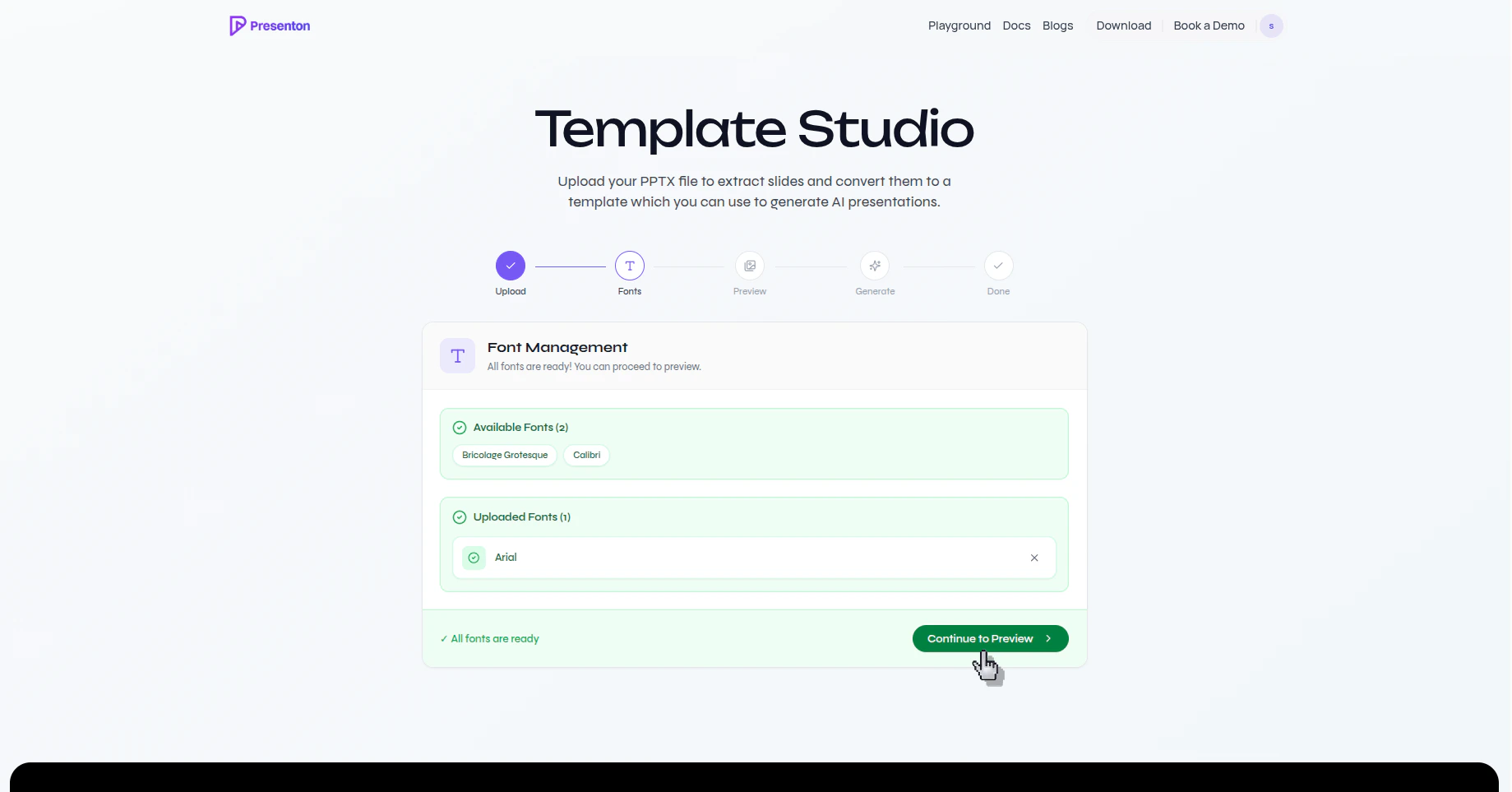
Presenton reads the fonts declared in the PPTX first. If a font can be found publicly, it is loaded automatically. If not, you are prompted to upload the missing font yourself. You can continue without every font, but the preview and generated layouts may not match the source deck accurately.
Preview the converted slides
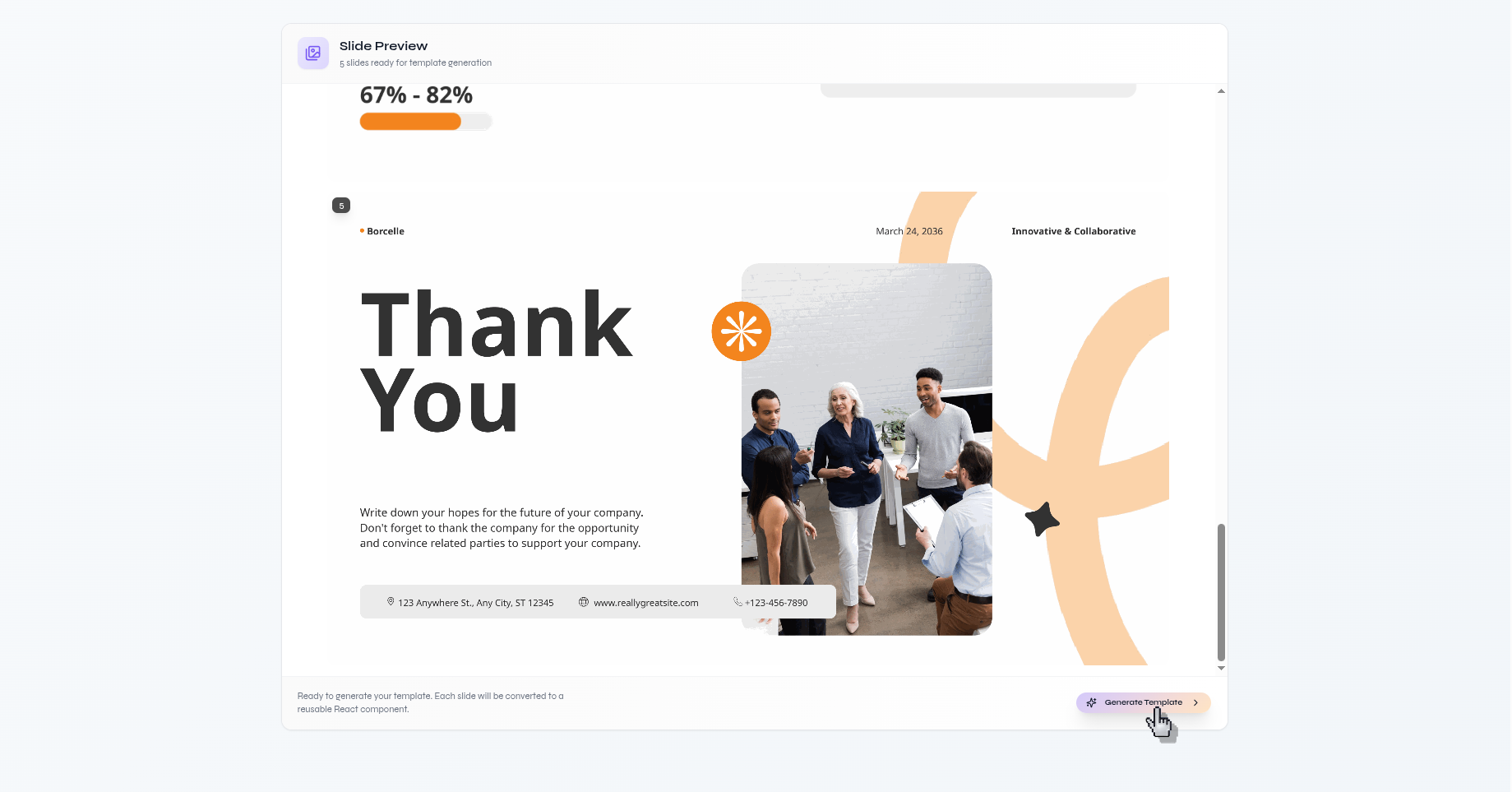
Generate layouts from the source slides
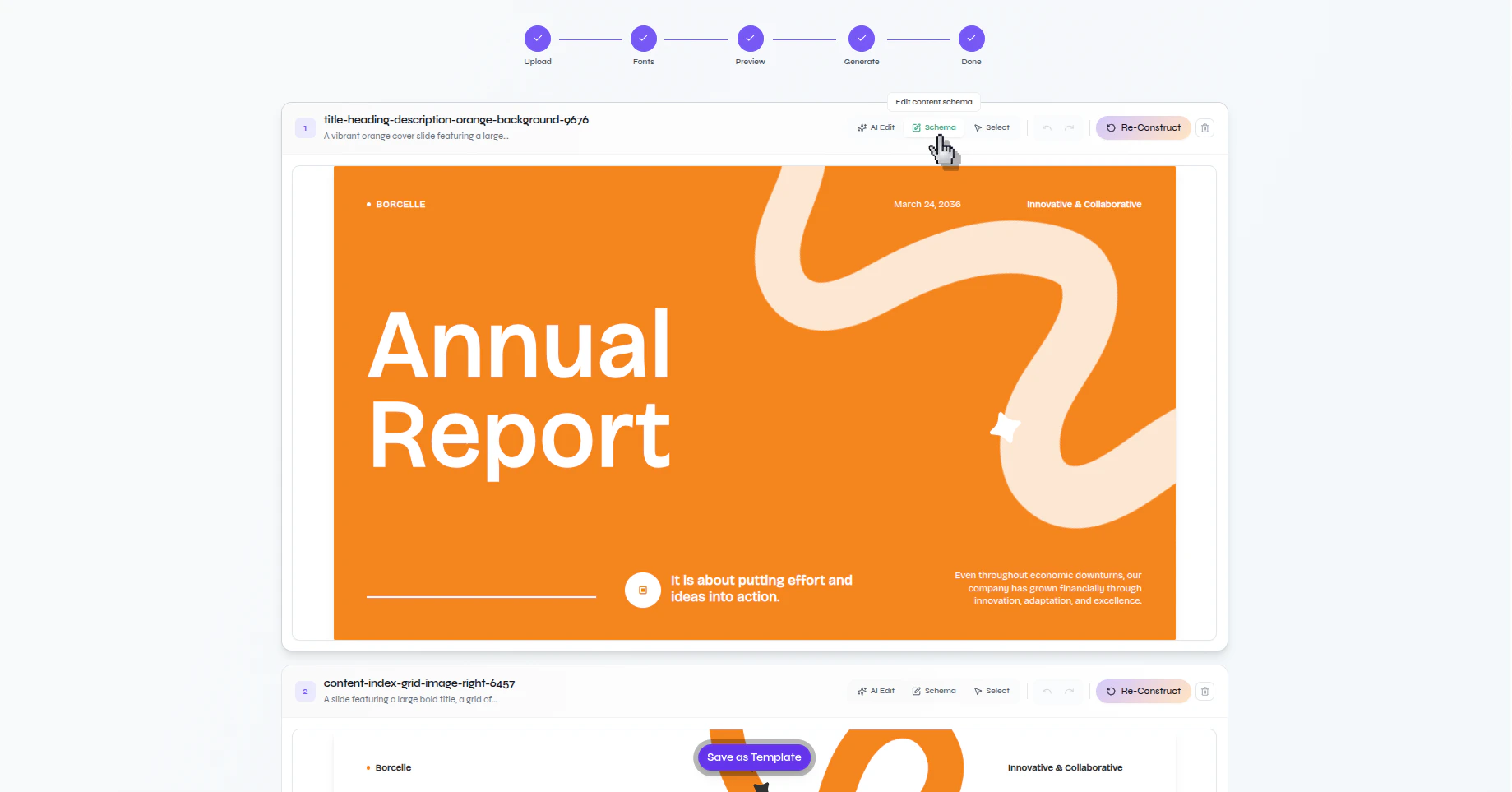
Each source slide becomes its own template layout. That is why the source PPTX should contain filled examples of every layout type you want to support later.
Review the schema for each layout
Open the schema for a generated layout
On a generated layout, click Schema to inspect the fields Presenton detected on that slide.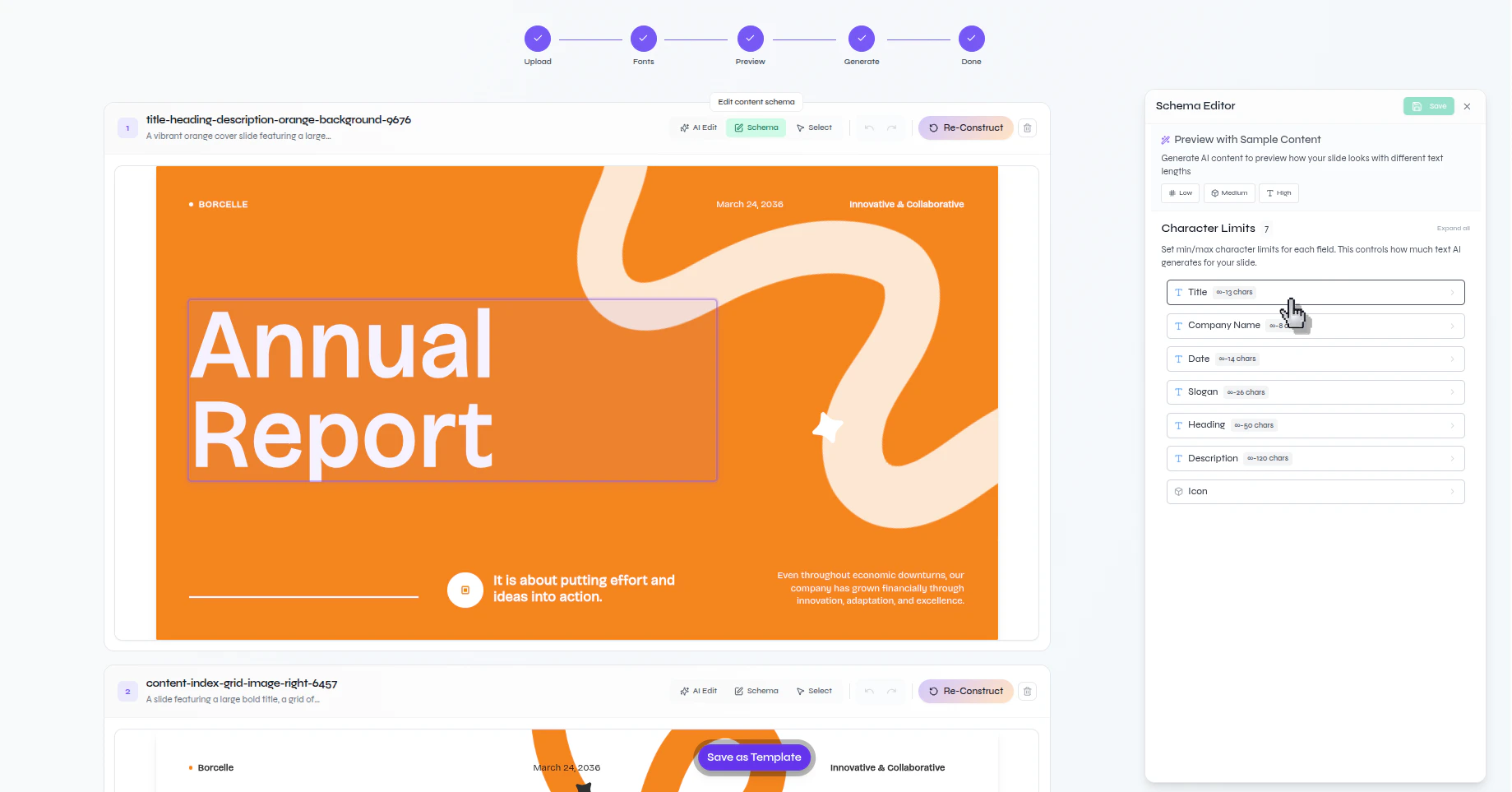
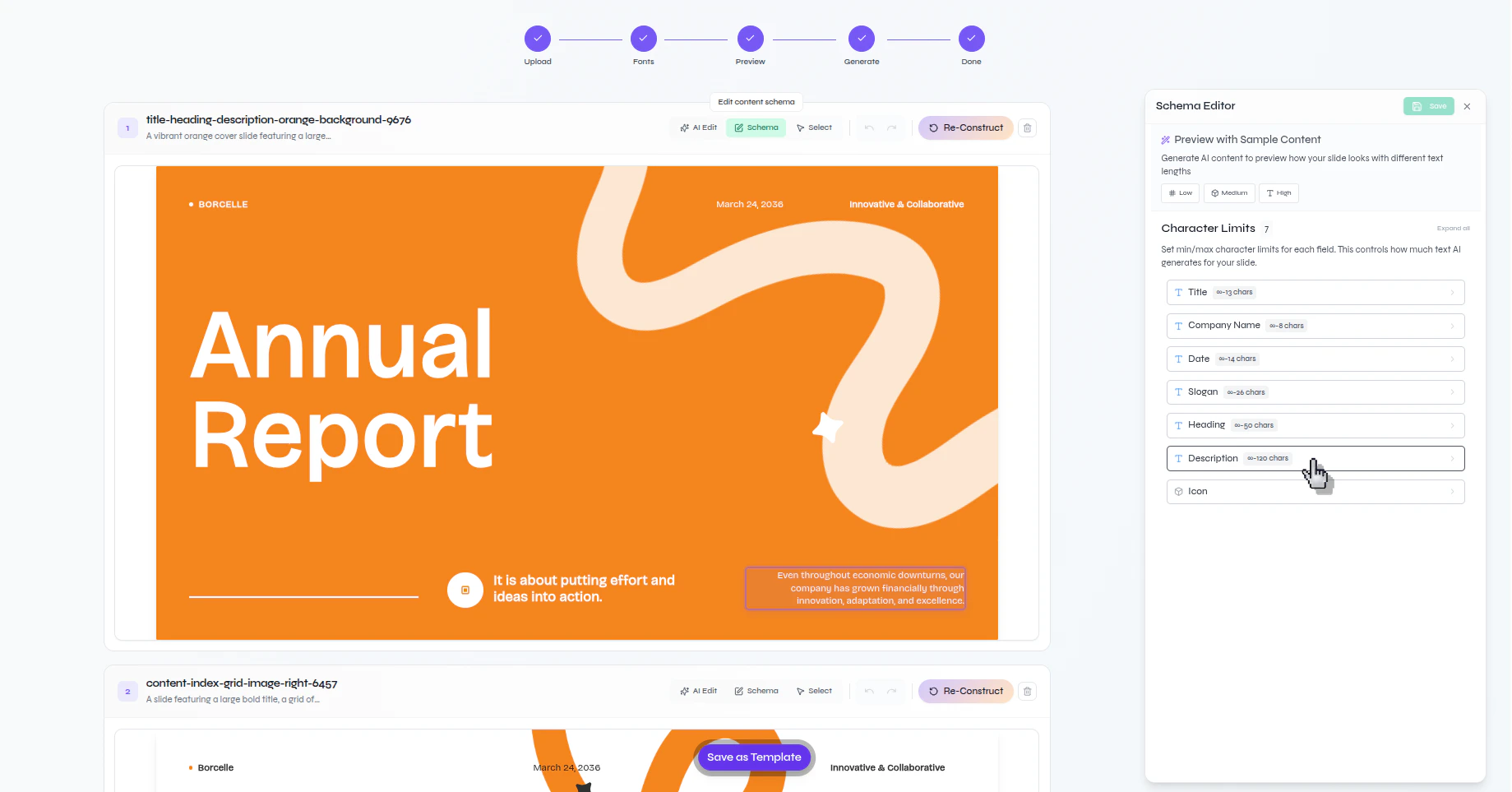
The schema is the contract Presenton uses later when it fills this layout with new content. If the limits are too tight, generated content may become unnaturally short. If they are too loose, text can overflow or weaken the design.
Fix layout issues and stress-test the result
Enter selection edit mode for a layout
If a generated layout needs correction, click Select so you can edit individual elements on the slide.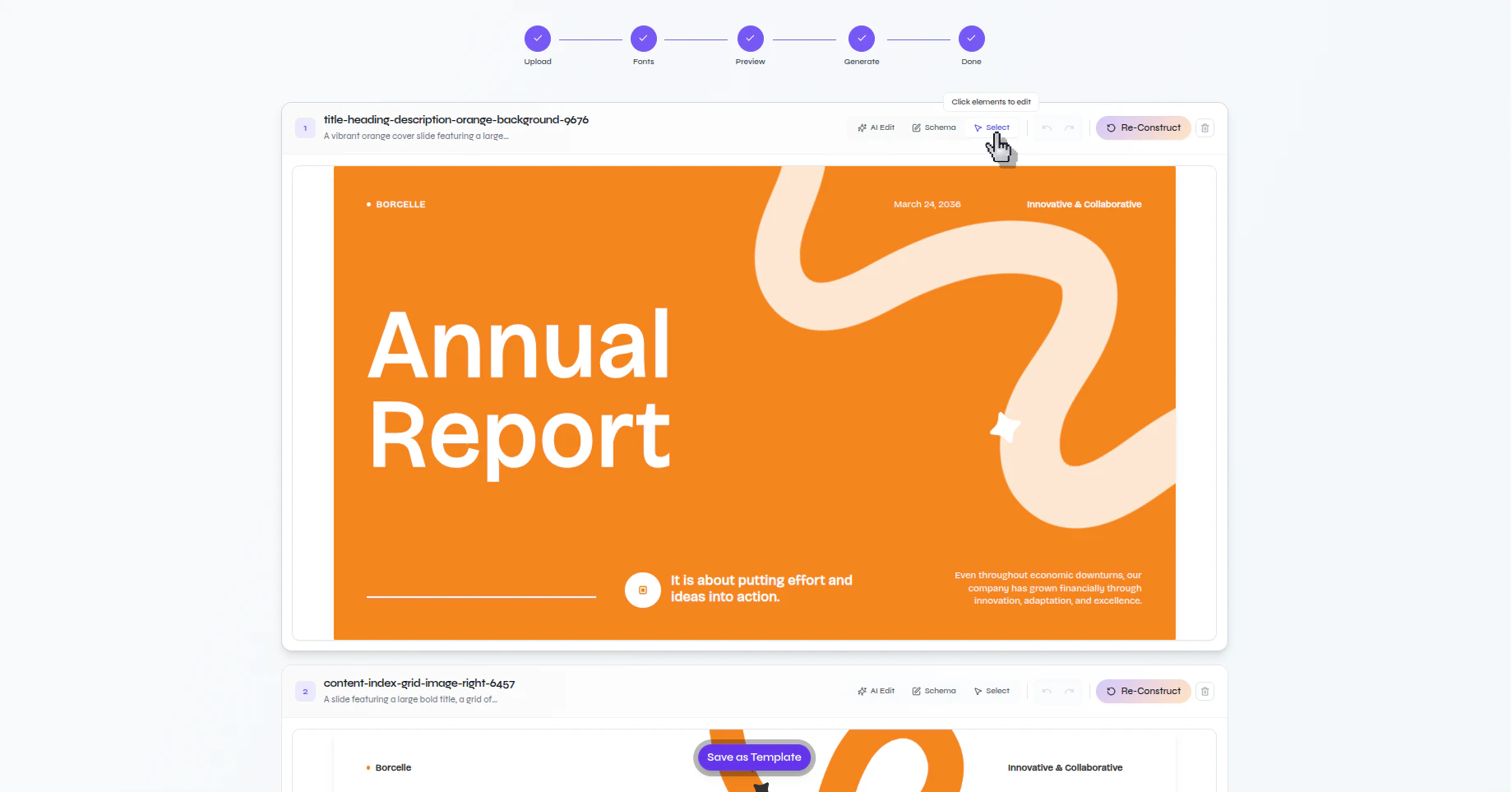
Prompt AI to change a selected element
Click the element you want to change, describe the edit in the prompt, and apply it.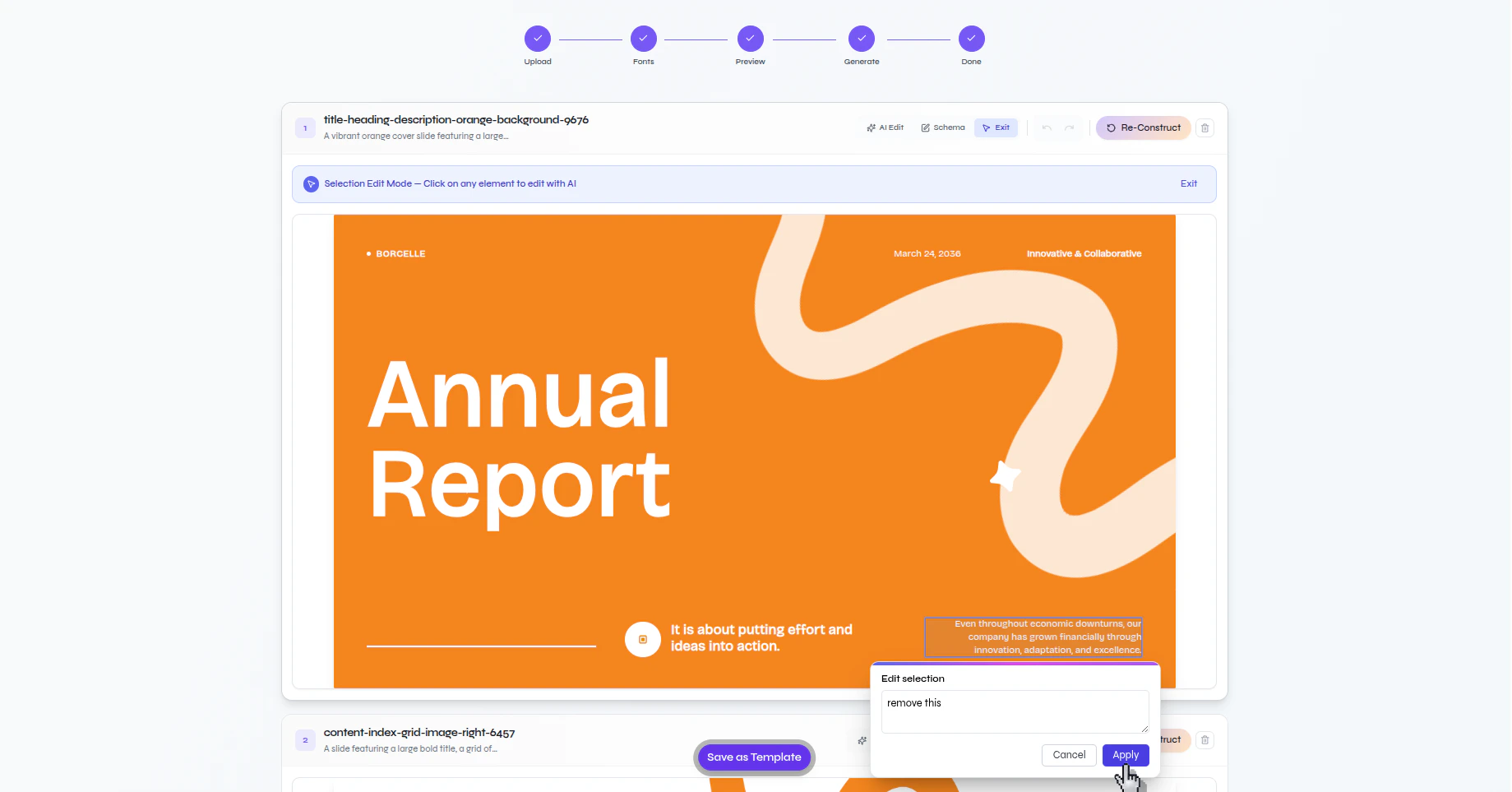
Review the updated layout after the edit
Confirm that the selected element changed in the way you intended.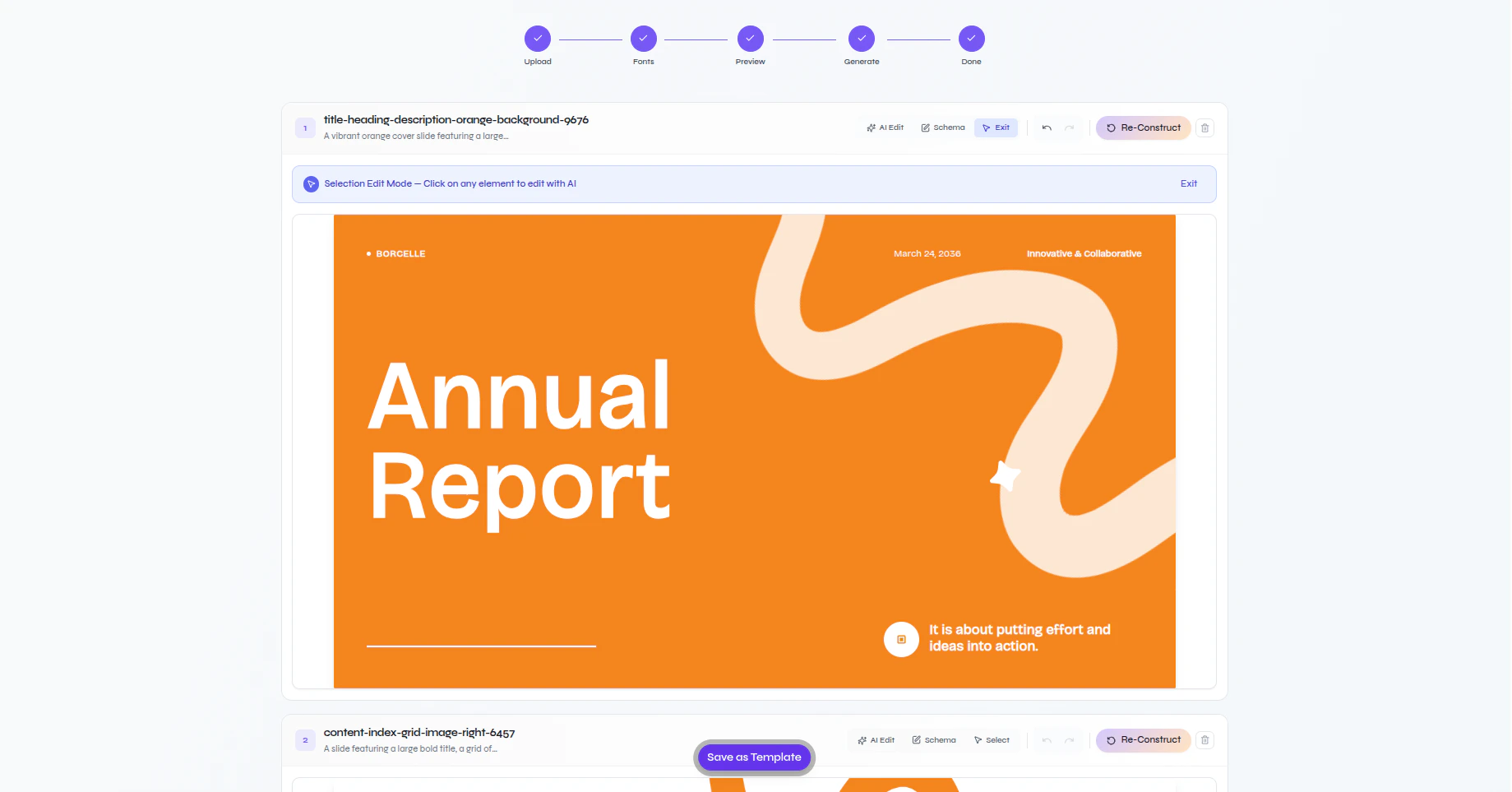
Preview the layout with sample content density
In the schema editor, use Low, Medium, or High to fill the layout with arbitrary sample content and test how it behaves.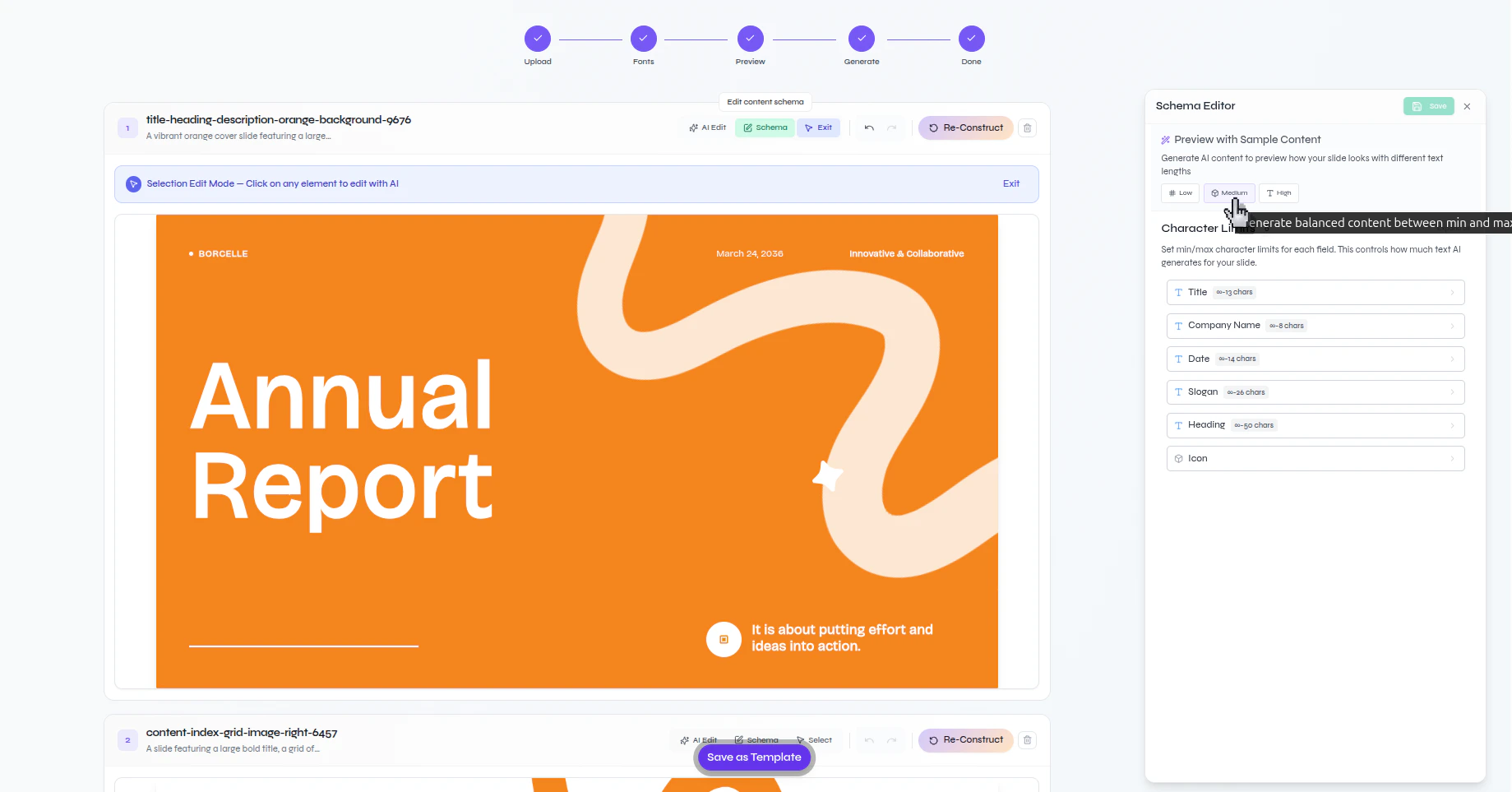
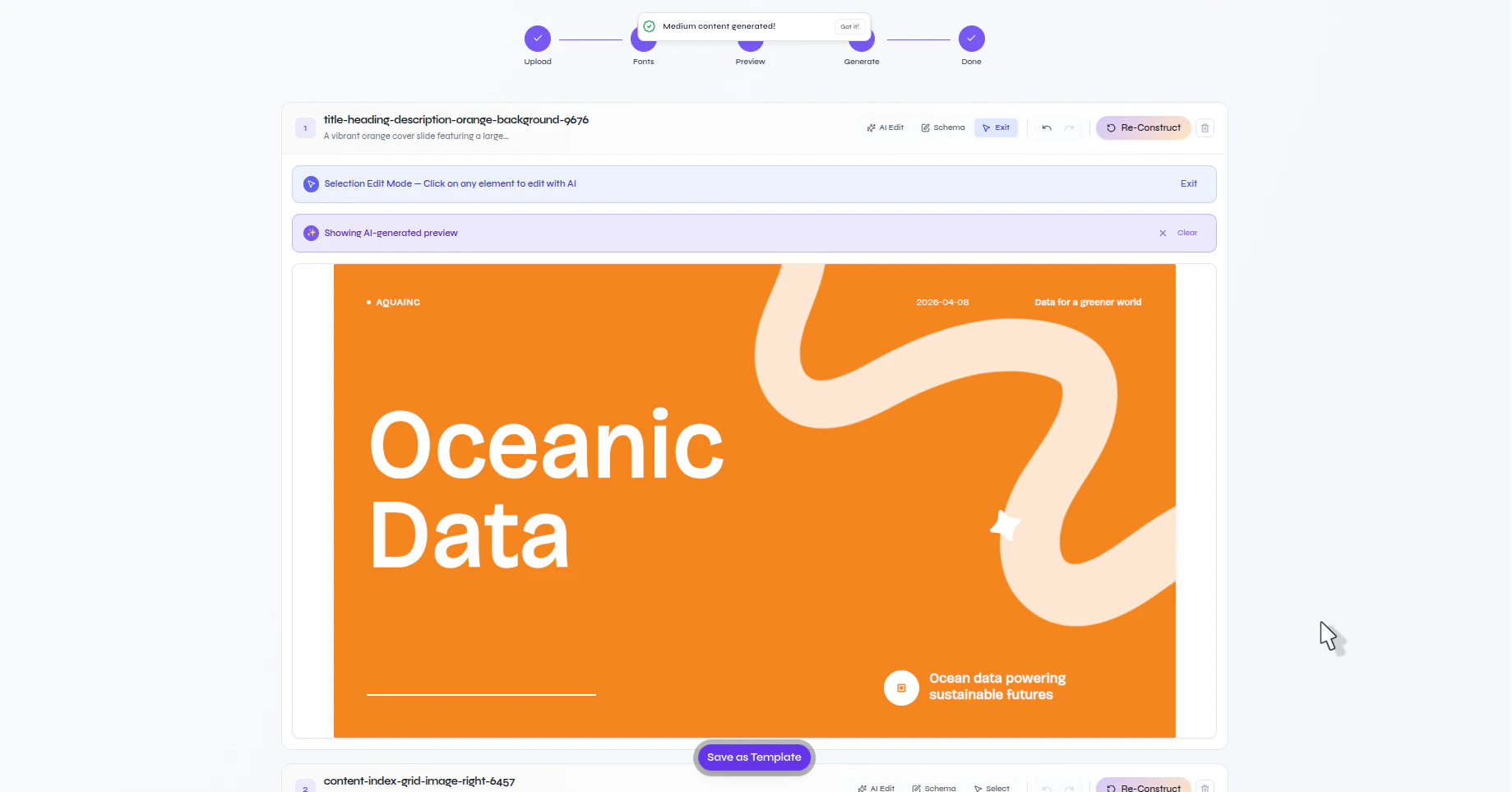
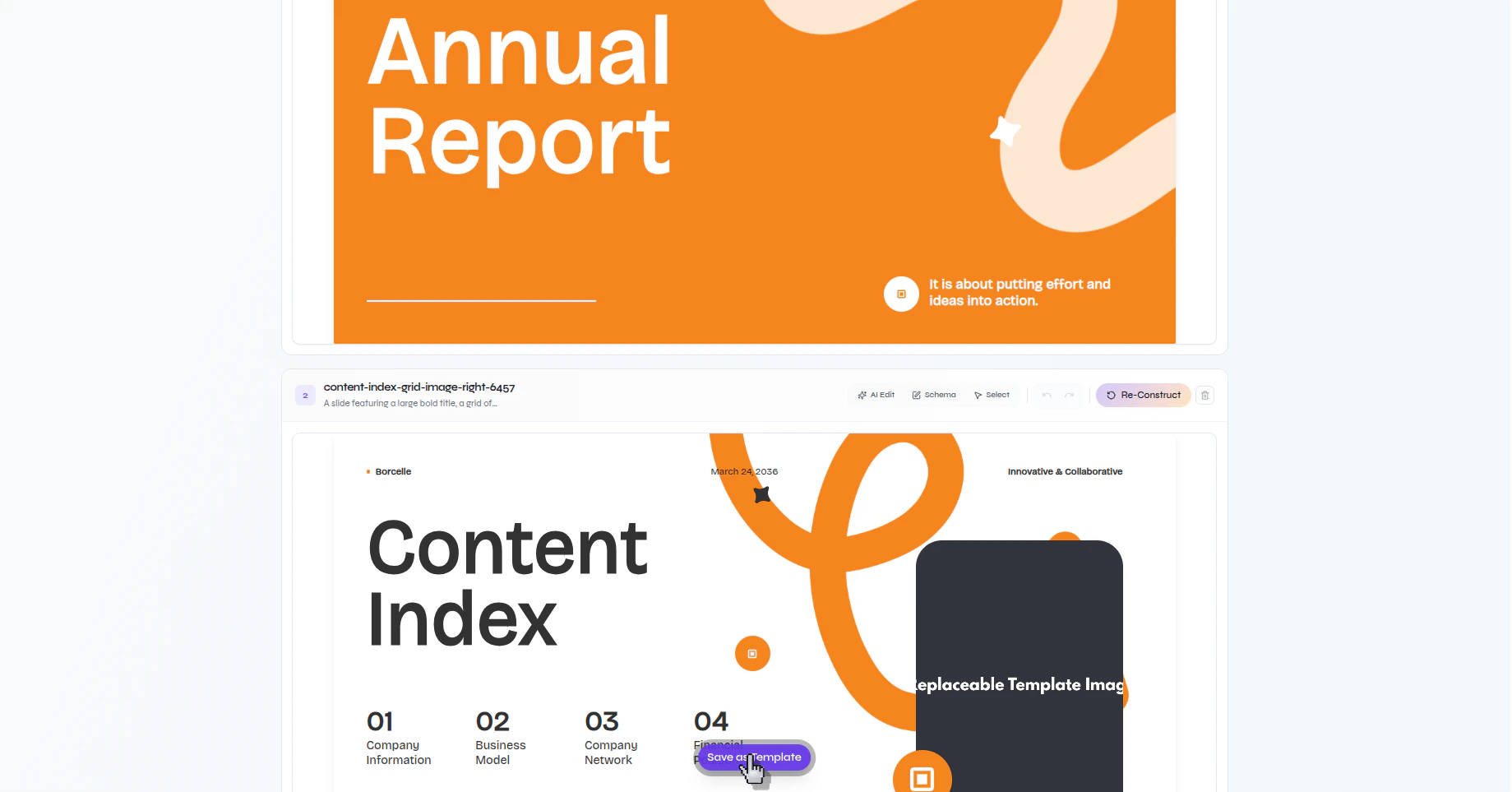
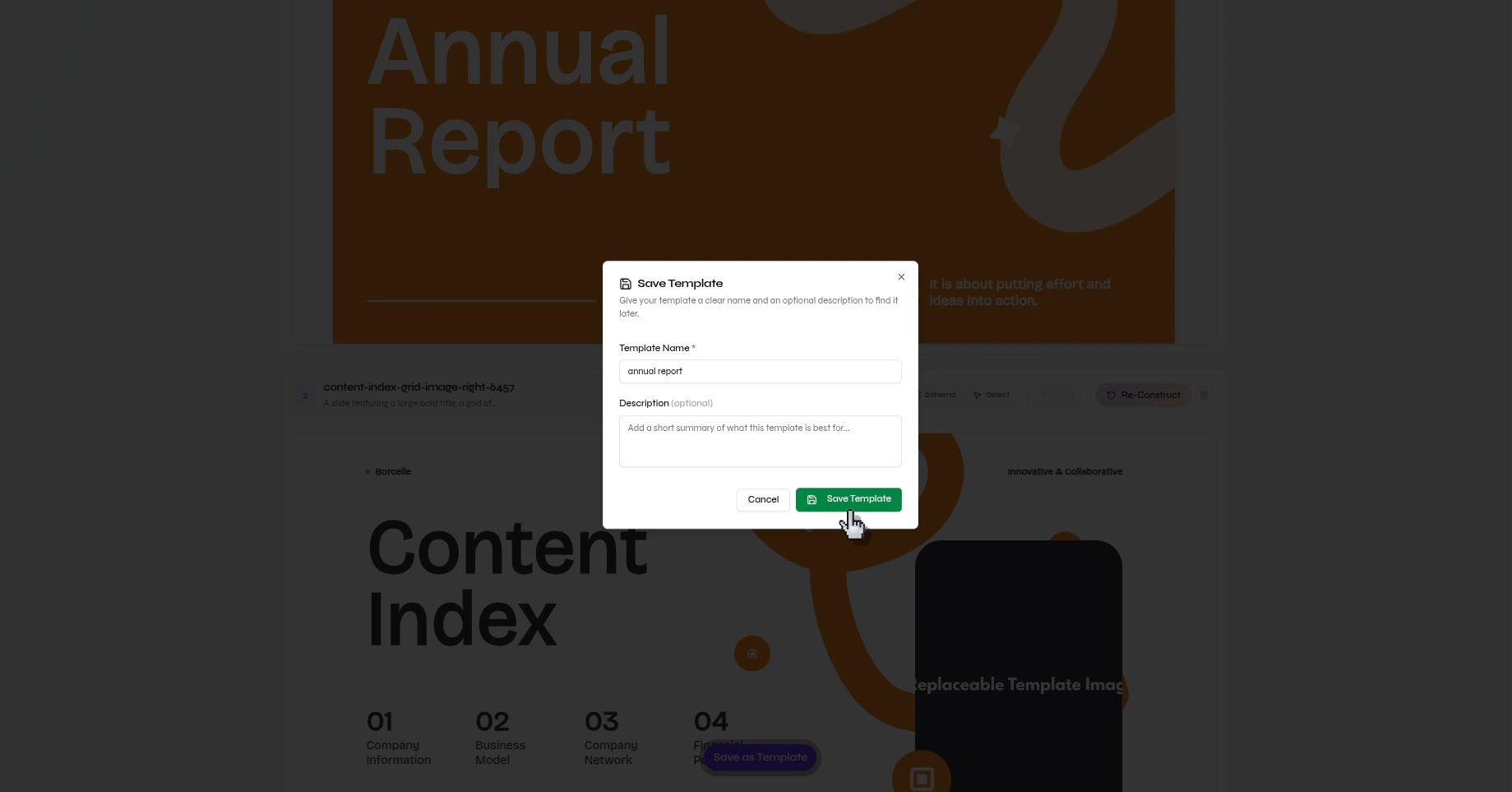
Save the template
Verify the result
Your custom template is saved and can be selected later when you generate a new presentation from templates.